
 By Julien Dubois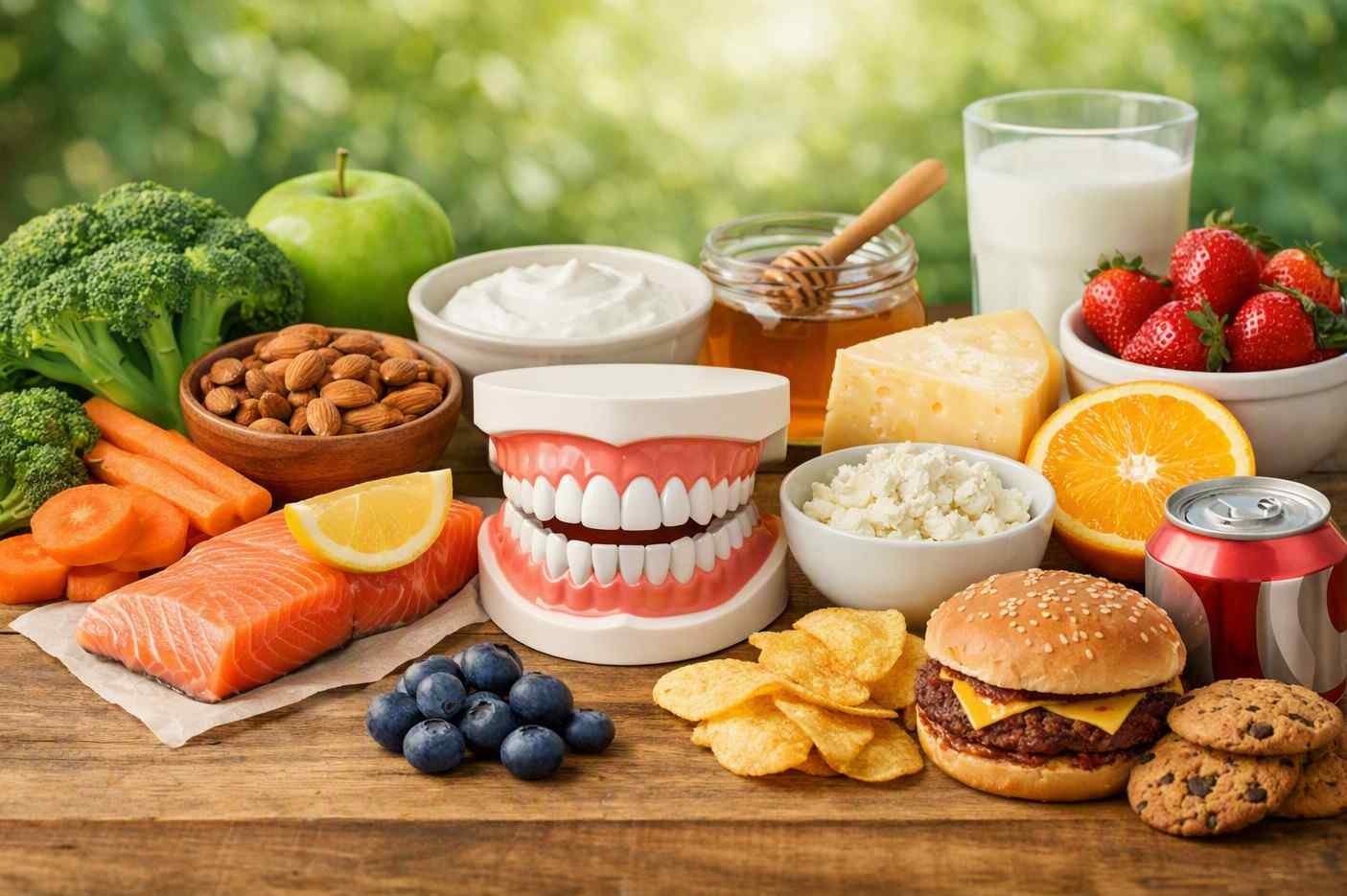
Your diet does a lot more for your smile than you probably realize. Every bite you take either feeds the bacteria that attack your enamel or helps rebuild and protect it. The good news is that small, mindful shifts in what you eat and how you eat can make a real difference in your long-term oral health, no complicated meal plan required.
This guide walks you through eight practical eating habits and food choices that support stronger teeth, along with a clear look at what to pull back on. Whether you cook most of your meals at home or you’re just starting to pay attention to what’s on your plate, these tips are built for real life.
1. Load Up on Dairy (Milk, Cheese, and Yogurt)
Calcium is the cornerstone mineral for maintaining strong teeth and bones. Foods like milk, yogurt, and cheese are excellent sources of calcium, which helps to remineralize enamel and keep your teeth strong. Dairy products are also rich in phosphates, another mineral that aids enamel remineralization by helping to restore lost minerals from tooth enamel.
Cheese also helps balance the pH in your mouth and stimulates saliva production, a natural defense against acid erosion. That makes cheese one of the smartest things you can eat at the end of a meal. Even a small cube goes a long way.
Many yogurts also contain probiotics, which promote a healthier balance of oral bacteria and can reduce inflammation. Choose plain, unsweetened yogurt to avoid added sugars that can harm your teeth.
2. Eat More Leafy Greens
Leafy greens like spinach, kale, and Swiss chard are packed with essential nutrients, including calcium and folic acid, which help protect and strengthen tooth enamel. These vegetables also help balance the acidity in your mouth, creating an environment that’s less conducive to the growth of harmful bacteria.
They contain folic acid, a type of B vitamin that has numerous health benefits, including potentially treating gum disease in pregnant women. You can toss a handful of spinach into a smoothie, add kale to a grain bowl, or use romaine as a sandwich wrap. You’re getting the dental benefits without changing your whole routine.
3. Snack on Crunchy Fruits and Vegetables

Foods like carrots, celery, apples, and cucumbers act like nature’s toothbrush. Their fibrous texture mechanically scrubs tooth surfaces, stimulates saliva flow, and helps wash away plaque and acids that threaten enamel.
Apples, often referred to as “nature’s toothbrush,” also provide essential vitamins like vitamin C, which supports gum health. Reaching for carrot sticks or celery when you want a snack is a habit your teeth will genuinely thank you for. This is especially useful for people comparing Invisalign vs traditional braces, since food choices and oral-cleaning routines can differ depending on the orthodontic treatment. The act of chewing these foods does more for your mouth than most people credit it for.
4. Add Nuts and Seeds to Your Meals
Nuts, such as almonds, and seeds, like sunflower and sesame seeds, are great sources of phosphorus and calcium, both essential for strong enamel.
Almonds are an excellent source of calcium and vitamin E, both of which help strengthen tooth enamel. The crunchy texture of almonds also helps remove plaque from teeth, providing natural protection for enamel. They’re one of the best enamel-strengthening foods you can snack on. A small handful of almonds as an afternoon snack is a simple swap that pays off over time.
5. Drink More Water (Especially After Meals)
Water is the most underrated dental habit out there. Rinsing your mouth with water after consuming enamel-weakening foods, waiting before brushing, and avoiding frequent snacking all make a significant difference.
Crunchy vegetables and water also play important roles in supporting healthy saliva flow and reducing acid exposure. If you’ve just finished something acidic or sugary, rinsing with plain water right after is one of the simplest things you can do to protect your enamel. It washes away residue before bacteria can get to work on it.
6. Time Your Acidic Foods Strategically
Acidic foods are not off the table entirely. The trick is knowing when and how to eat them. Timing plays a crucial role in minimizing enamel damage. Consuming acidic or sugary foods and beverages during meals rather than as standalone snacks is beneficial, as increased saliva production during eating helps neutralize acids more effectively.
Citrus fruits such as oranges, lemons, and grapefruits are widely considered healthy because they are packed with vitamin C and antioxidants. Their high acidity can, however, gradually soften and wear down enamel when consumed frequently. Eating citrus as part of a full meal, rather than sipping lemon water all morning, keeps your enamel in much better shape.
Wait at least 30 to 60 minutes after consuming acidic foods before brushing your teeth. Brushing immediately after acid exposure can actually accelerate enamel loss by mechanically removing the softened enamel surface. This is one of those counterintuitive tips that a good dentist in Rolla will tell you at your very first checkup.
7. Cut Back on Sugary and Starchy Foods
Sugar is the main fuel source for cavity-causing bacteria. Sugary foods like candy, cakes, and sodas are notorious for contributing to tooth decay. The bacteria in your mouth feed on sugar, producing acids that weaken enamel and lead to cavities. Even fruit juices, which may seem healthy, are often loaded with sugar and can cause similar damage.
Starches, like white bread, chips, and pasta, break down into sugars in the mouth, which means they carry a similar risk even if they don’t taste sweet. Swapping to wholegrain options is not only healthier for the body but also better for oral health. Wholegrain breads are less likely to stick and have a lower impact on enamel.
Sticky sweets are especially problematic. The worst products are toffees, biscuits, cakes, and sticky sweets, which cling to teeth for longer. The longer sugar sits against your enamel, the more opportunity bacteria have to produce damaging acids.
8. Rethink Soda, Energy Drinks, and Frequent Snacking
Carbonated beverages present a double threat to enamel health. The carbonic acid created during carbonation lowers the drink’s pH, while added sugars feed harmful bacteria. Regular sodas, diet sodas, and even sparkling water can contribute to enamel erosion, with some cola beverages having pH levels as low as 2.5.
Carbonated sodas enable plaque to produce more acid to attack tooth enamel. So, if you sip soda all day, you essentially coat your teeth in acid. Plus, it dries out your mouth, meaning you have less saliva.
If you do drink something acidic or fizzy, use a straw when drinking acidic beverages to minimize contact with tooth surfaces. Position the straw toward the back of your mouth to bypass teeth entirely when possible.
Frequent snacking is just as much of a concern as what you snack on. Every time you eat, you kick off an acid attack in your mouth. Spacing your meals out and limiting between-meal nibbling gives your saliva time to neutralize acids and begin the natural repair cycle. For more on how diet connects to oral health, the American Dental Association’s MouthHealthy resource is a solid reference. The Harvard T.H. Chan School of Public Health’s Nutrition Source also covers the broader connection between mindful eating and your overall health. And for a deeper dive into how enamel erodes and how to protect it, Healthline’s breakdown of the worst foods for teeth is worth bookmarking.
A Few Extra Habits Worth Building

Beyond specific foods, a few daily behaviors make a real difference in how well your diet supports your dental health.
- Drink water after every meal. It flushes away food particles and helps neutralize acids before they can do damage.
- Chew sugar-free gum after eating. Chewing sugar-free gum stimulates saliva production, which helps neutralize acids.
- End meals with something alkaline. A bite of cheese or a few raw vegetables after an acidic meal helps bring your mouth’s pH back to a safer level.
- Keep healthy snacks visible. Keep healthy food choices, such as fruits and vegetables, readily available in cabinets, cupboards, and the refrigerator to encourage mindful healthy eating habits.
- Brush twice daily with fluoride toothpaste. Brush your teeth twice a day with fluoride toothpaste to strengthen enamel. Floss daily to remove plaque and prevent acid buildup.
The Bottom Line
Your teeth are with you for life, and the foods you choose every day have a cumulative effect on how strong and healthy they stay. Your enamel protects your teeth against decay, daily chewing, and environmental stress. While it cannot be regenerated once lost, weakened enamel can be fortified with the right nutrition and lifestyle choices.
Building eating habits that protect your teeth does not mean you have to overhaul your entire diet. Start with a few of these habits, build from there, and back them up with regular dental visits. The combination of smart eating and professional care is what keeps your smile strong for the long haul.