
 By Julien Dubois
The first time I searched how to change a car battery, my car refused to start and the dashboard lights looked weak. If you’re in that situation, don’t stress. Changing a car battery is much simpler than it looks—and you can do it safely at home with just a few tools.
This guide explains everything you need to know: signs of a failing battery, tools required, safety rules, a step-by-step installation method, disposal guidelines, and commonly asked questions.
What Are the Signs You Need to Change a Car Battery?
Slow Engine Crank
If the engine turns over slowly or hesitates, the battery may be weak.
Clicking Noise When Starting
Rapid clicking usually means the battery doesn’t have enough charge to start the engine.
Dim Lights or Electrical Problems
Headlights flickering, slow windows, or faulty electronics are common symptoms.
Battery Warning Light
If this appears on your dashboard, the battery or alternator may be failing.
Battery Age
Car batteries generally last 3–5 years. Anything older is at risk of sudden failure.
What Tools Do You Need to Change a Car Battery?

Essential Tools
- New car battery (correct size, type & CCA for your vehicle)
- Wrench or socket set (7mm, 8mm, 10mm, or 13mm)
- Wire brush or terminal cleaning tool
- Baking soda + water mixture or commercial terminal cleaner
- Safety goggles
- Insulated work gloves
- Old towel or rag
Optional Tools
- Lithium grease (prevents future corrosion)
- Battery cleaning brush
- Memory saver (keeps your radio/GPS settings intact)
- Fender cover to protect paint
Having these tools ready ensures a smooth and safe battery replacement.
Is It Safe to Replace a Car Battery at Home?
Yes—but you must follow key safety steps.
Wear Protective Gear
Use gloves and goggles before touching the battery.
Remove Metal Jewelry
Rings and bracelets can cause dangerous electrical shorts.
Work in a Ventilated Area
Batteries can release hydrogen gas, and adequate ventilation reduces any risk of buildup.
Always Disconnect Negative First
This prevents sparks if your wrench touches metal.
Following these simple rules keeps your entire battery replacement safe.
How to Change a Car Battery Step-by-Step?
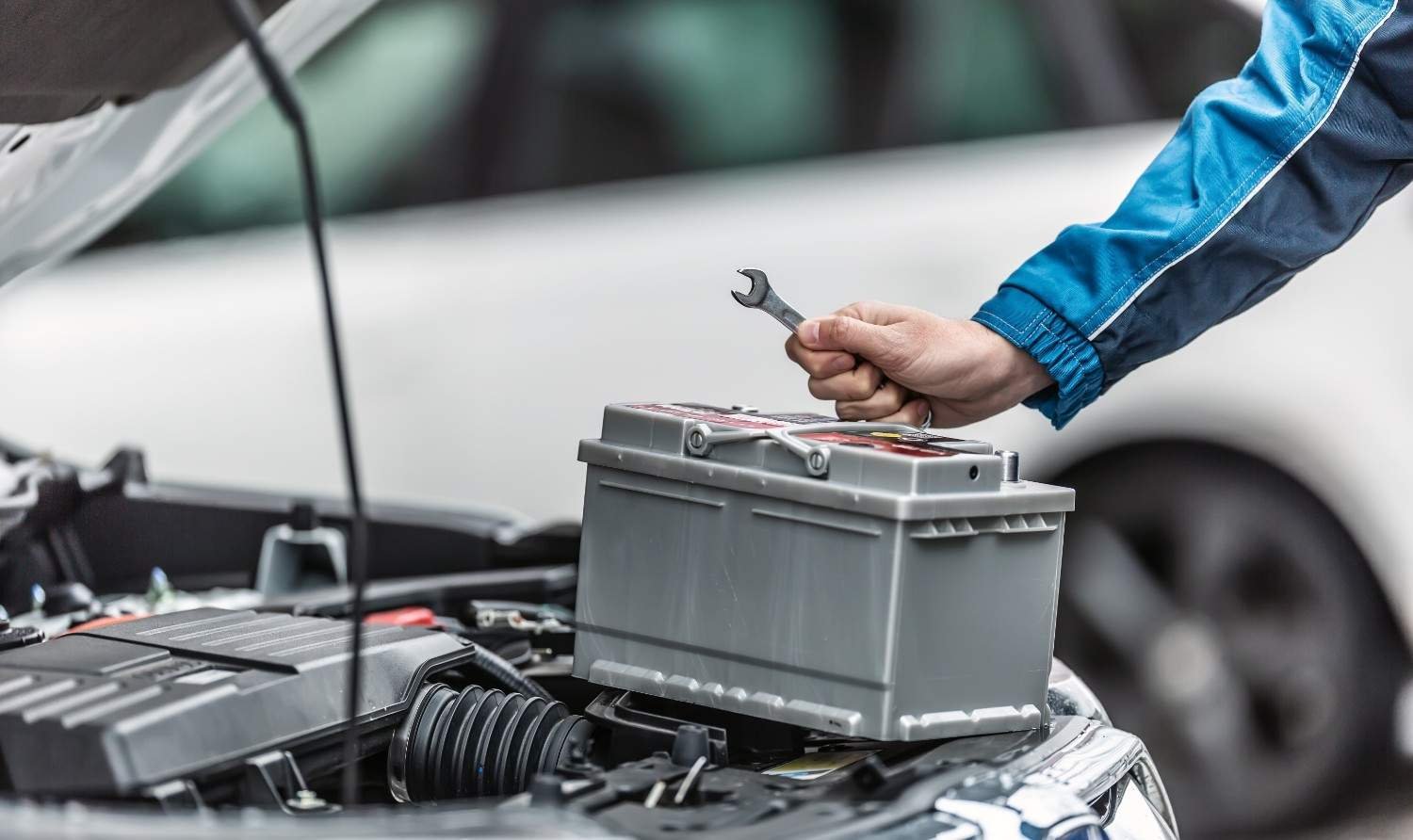
This complete step-by-step guide follows proper safety procedure and terminal sequence so you avoid electrical shorts or damage.
1. Park Safely and Turn Off the Engine
Park on level ground, engage the parking brake, turn off the engine, and remove the keys.
Open the hood (or trunk/seat panel, depending on your car).
2. Put On Safety Gear
Wear goggles and insulated gloves.
Remove all jewelry to avoid accidental electric contact.
3. Locate the Battery and Identify Terminals
Find the battery and identify:
- Positive (+) terminal (usually red)
- Negative (–) terminal (usually black)
Some cars have plastic covers over the terminals—remove them carefully.
4. Disconnect the Negative Terminal First
Use the proper-size wrench (10mm is most common).
Loosen the clamp and remove the black cable.
Position it away from all metal parts.
5. Disconnect the Positive Terminal
Loosen and remove the red cable.
Secure it so it cannot touch metal or the negative cable.
6. Remove the Battery Hold-Down Clamp
Most vehicles have a bracket or clamp securing the battery.
Remove it using your socket or wrench.
7. Lift Out the Old Battery
Battery weight ranges from 25–50 lbs.
Lift straight upward while keeping it upright (batteries contain acid).
8. Clean the Battery Tray and Terminals
Use a wire brush with baking soda + water mixture to remove corrosion.
Wipe everything dry with a towel.
This ensures a strong future electrical connection.

9. Place the New Battery in the Tray
Lower the new battery into position with terminals facing the correct direction.
10. Secure the Battery
Reinstall the hold-down clamp or bracket so the battery doesn’t move during driving.
11. Reconnect the Positive Terminal First
Apply a thin layer of lithium grease (optional).
Attach the red cable and tighten it firmly.
12. Reconnect the Negative Terminal
Attach the black cable and tighten it securely.
This completes the installation.
13. Double-Check Everything and Start the Car
Ensure:
- Both terminals are tight
- The battery is stable
- No tools remain in the engine bay
Close the hood and start the engine.
You may need to reset your radio, clock, or navigation system.
How Do You Dispose of an Old Car Battery Safely?
Car batteries contain lead and acid—they cannot go in regular trash.
Where to Recycle
- Auto parts stores (most accept them for free)
- Dealership service centers
- Municipal hazardous waste sites
Many stores offer a core fee refund ($10–$20 discount) when you return your old battery during purchase.
How Much Does It Cost to Replace a Car Battery?
Here are some widely used batteries with their cost:
Standard Lead-Acid Batteries
$60–$150
AGM Batteries
$150–$300
Hybrid/EV Batteries
$1,000+ (professional replacement required)
Labor costs at auto shops range from $30–$60 if you choose not to DIY.
Frequently Asked Questions
1. How long does it take to change a car battery?
Usually 10–20 minutes.
2. Can I change a battery without losing my radio settings?
Yes—use a memory saver connected to the OBD port or cigarette lighter.
3. Do I disconnect both terminals?
Yes. Remove negative first, then positive. Reinstall positive first, then negative.
4. Can I damage my car by installing the battery incorrectly?
Yes. Reversing terminals can blow fuses or damage the alternator.
5. Can I use any battery model in my car?
No. Battery size, CCA rating, and type must match your vehicle’s requirements.
A Small Task That Makes a Big Difference on the Road
Learning how to change a car battery gives you confidence, saves money, and helps you handle a common car problem without stress. With the right tools, safety gear, and step-by-step guidance, anyone can replace a battery at home—quickly and safely.